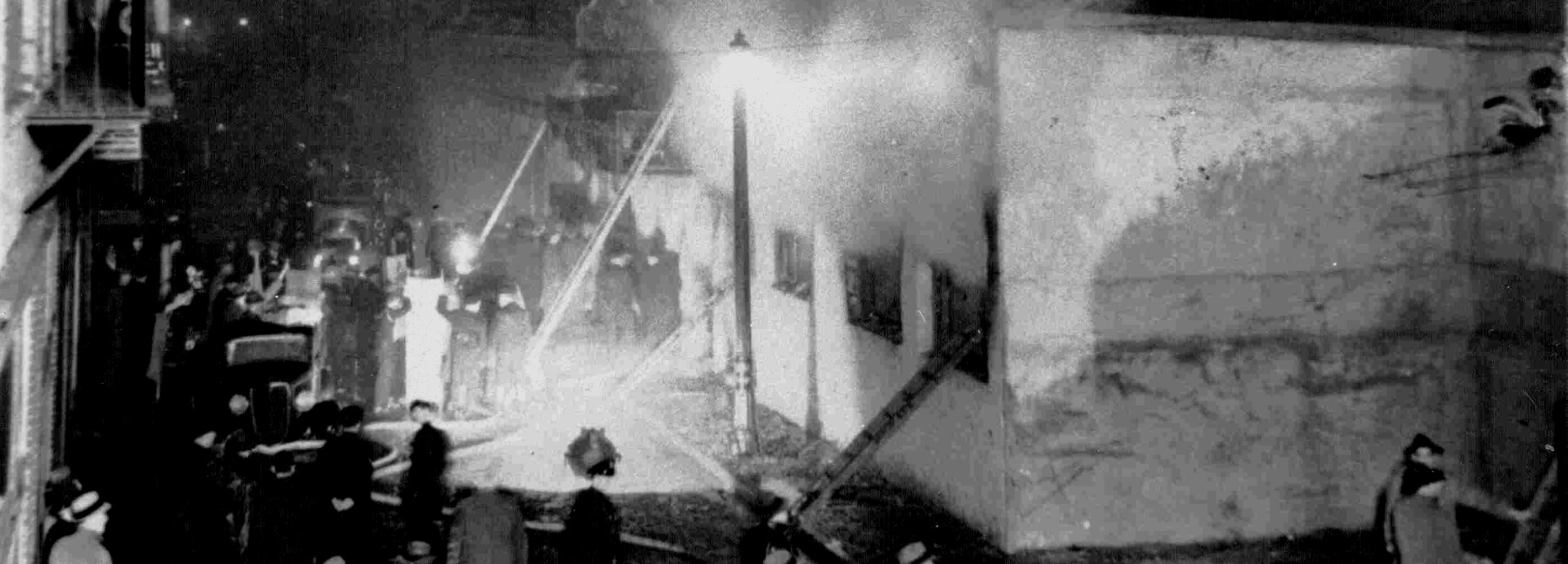
While there are many mysteries about the fire, its initiation point and spread is well documented.
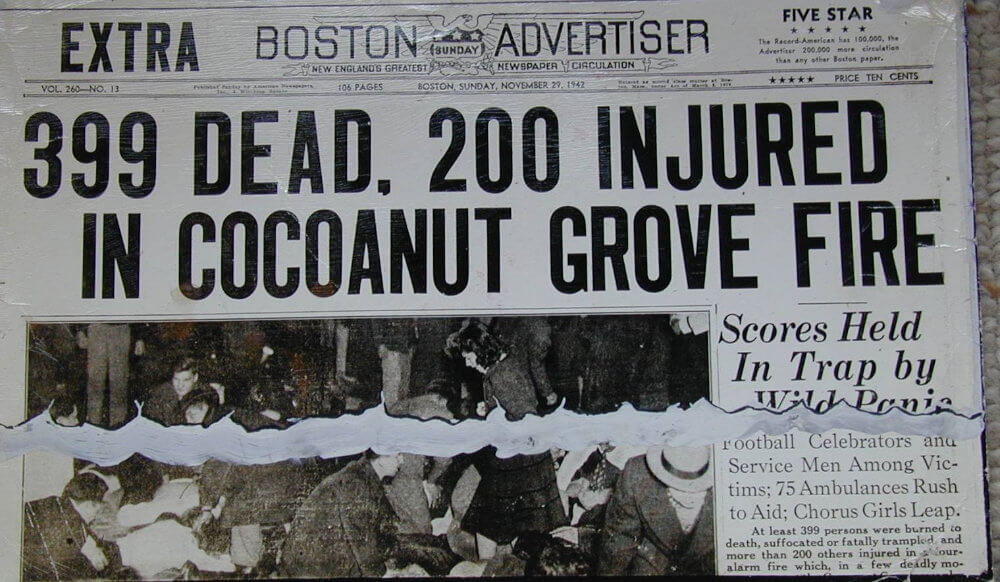
On Saturday, November 28, 1942, the Cocoanut Grove was packed with patrons and staff. The fire originated in the club’s downstairs Melody Lounge. A flame was first seen burning about 10:15 p.m. in a fake palm tree and in the suspended cloth false ceiling in the northwest corner. Several patrons reported seeing a busboy standing on a stool with a lit match to adjust a light bulb in the tree at that time. However the official cause of the fire was deemed “of unknown origin.” The fire spread throughout the Melody Lounge, along the underside of the false ceiling and above the heads of panicked patrons who began heading upstairs.The fire ascended the stairway and appeared to explode through aconnecting corridor into the foyer and then into the Caricature Bar. The fire quickly spread to the main dining room and then, in just a few minutes, into the new lounge on Broadway, leaving little time for people to get out.
The fire was described as a “ball of fire” below the ceiling. Many witnesses described the flame as of yellowish or bluish color. As fire traveled through the lobby toward the Caricature Bar, it was followed by a thick cloud of smoke.
Upon reaching the main dining room, the fire swept high about the room near the ceiling, shortly followed by a cloud of dense smoke described by witnesses as acrid.
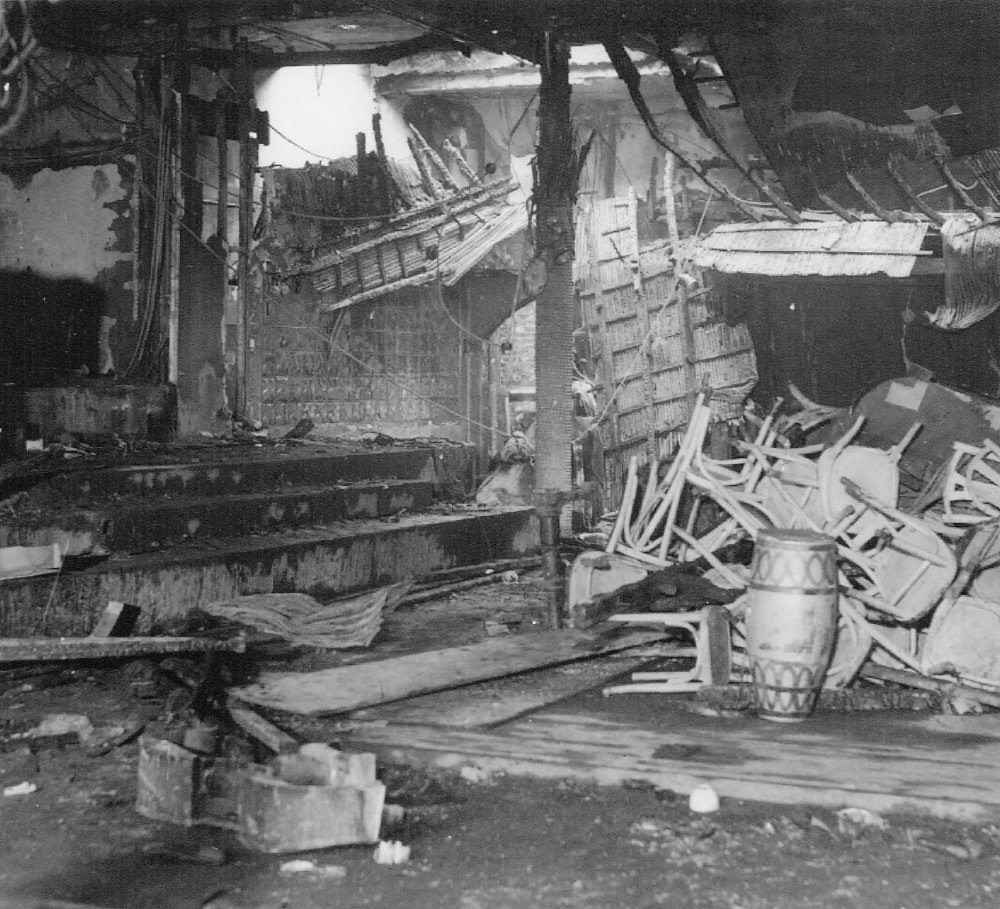
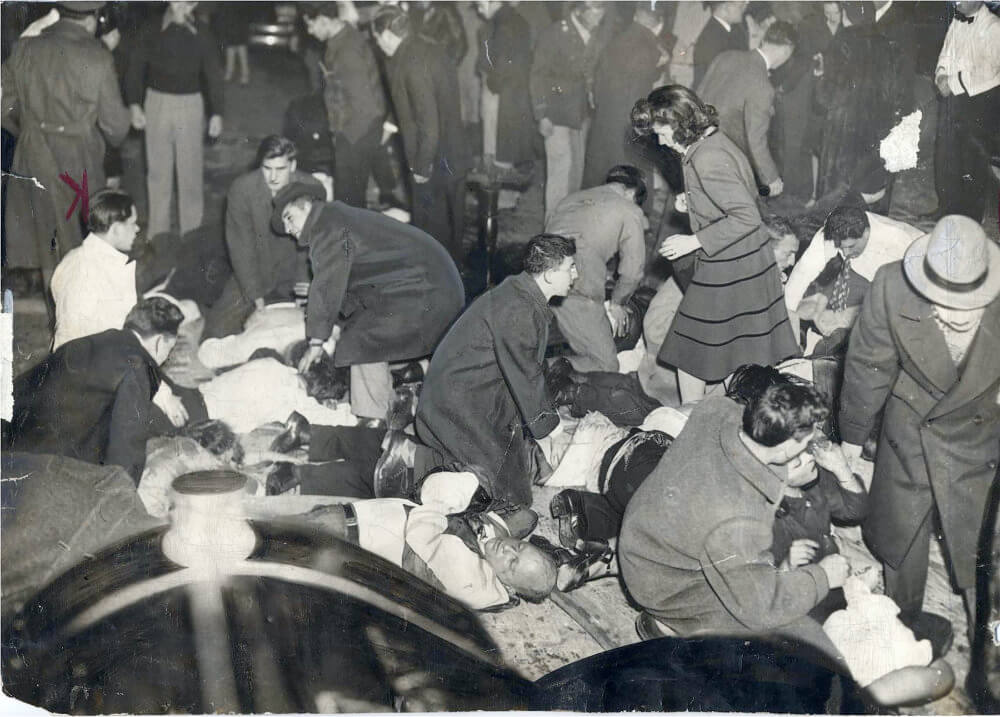
Many people collapsed in the dining room from the heat and smoke. Others dropped on their hands and knees to the floor and crawled to the door on the Shawmut Street side. Some were hit by the toxic, superheated air and never moved from their seats. Still other persons who were in the Melody Lounge at the time the fire broke out remained there until there was no longer any flames, and they later found their way to the exits on the street floor. Others were trapped in the Broadway lounge.
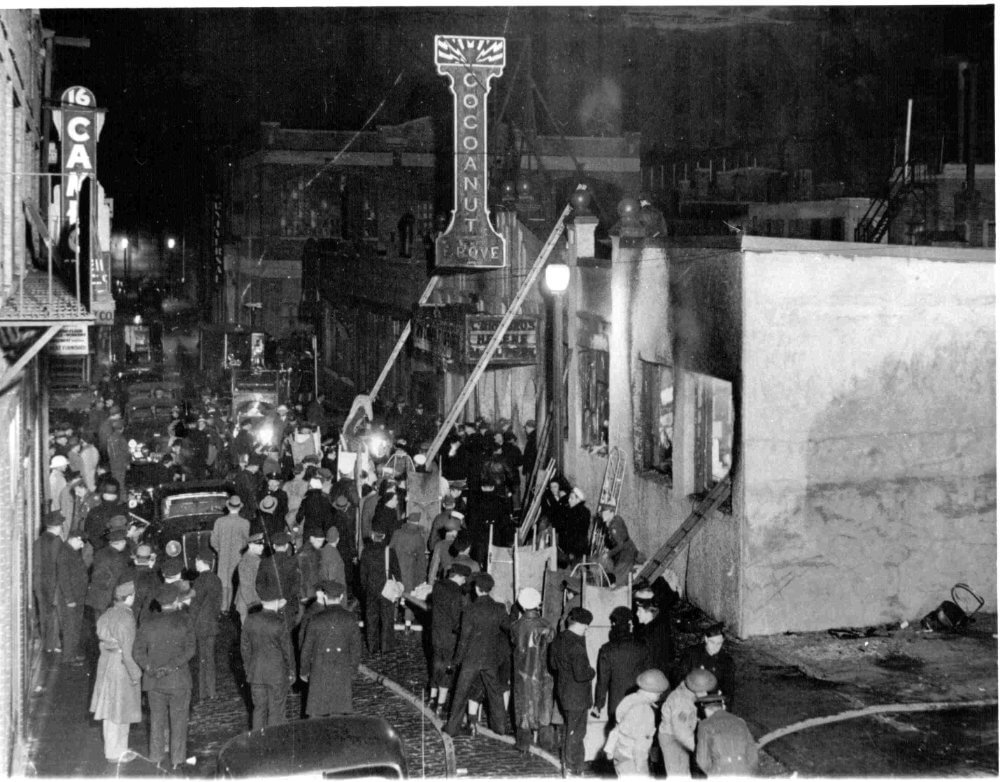
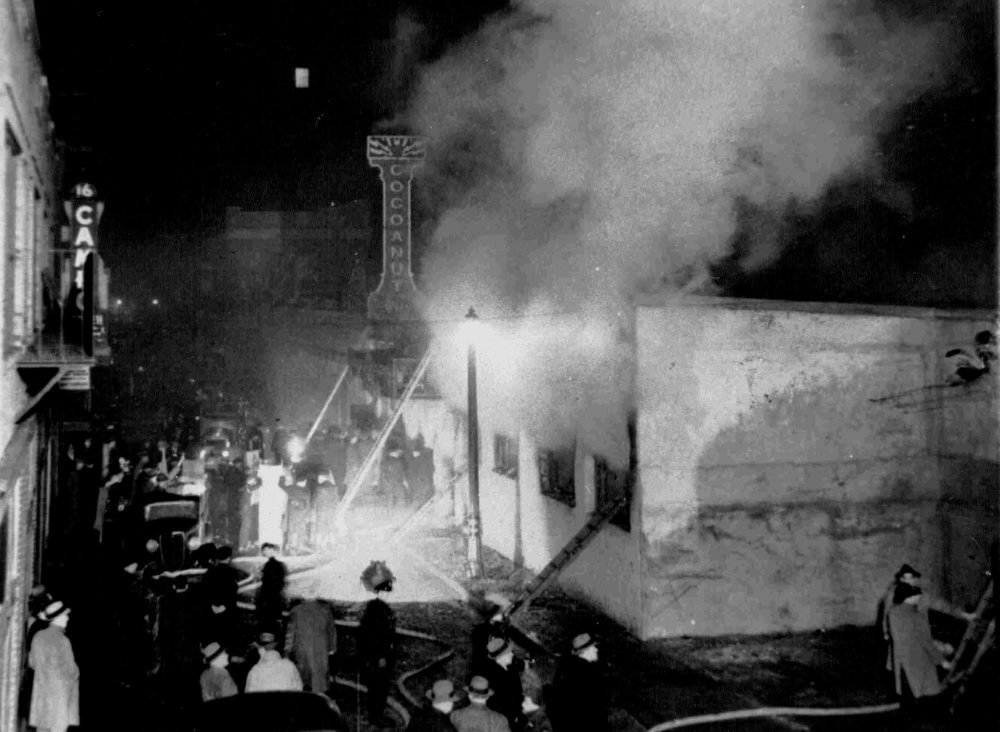
Flames poured out of the exits on Piedmont Street, Shawmut Street
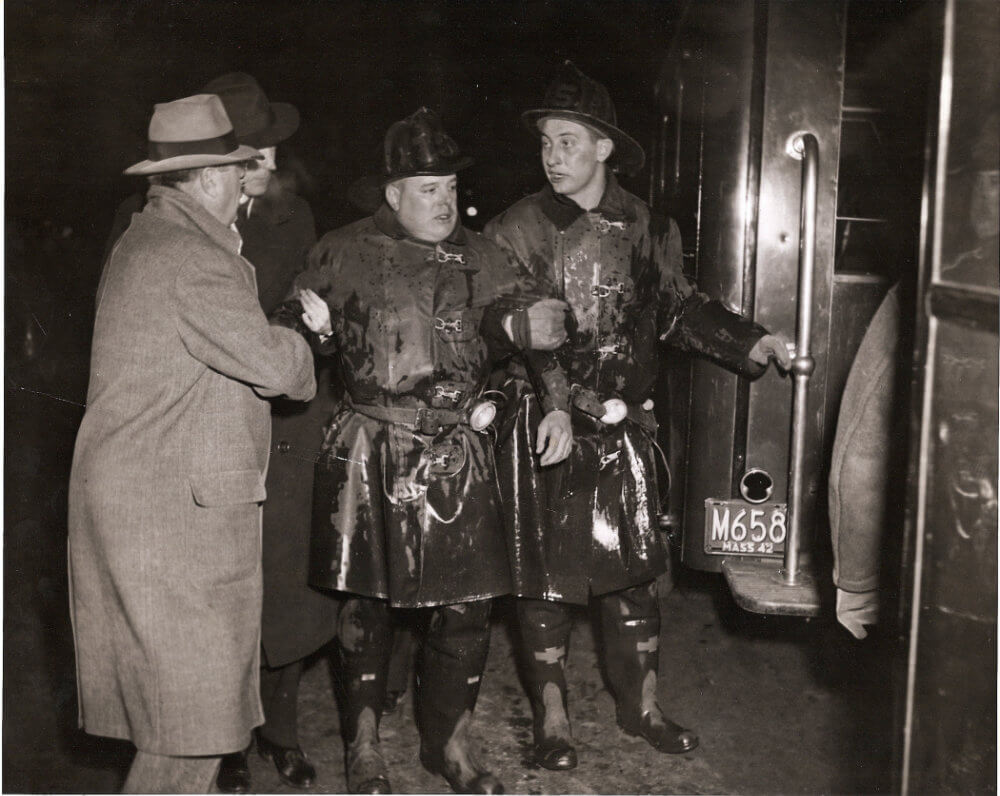
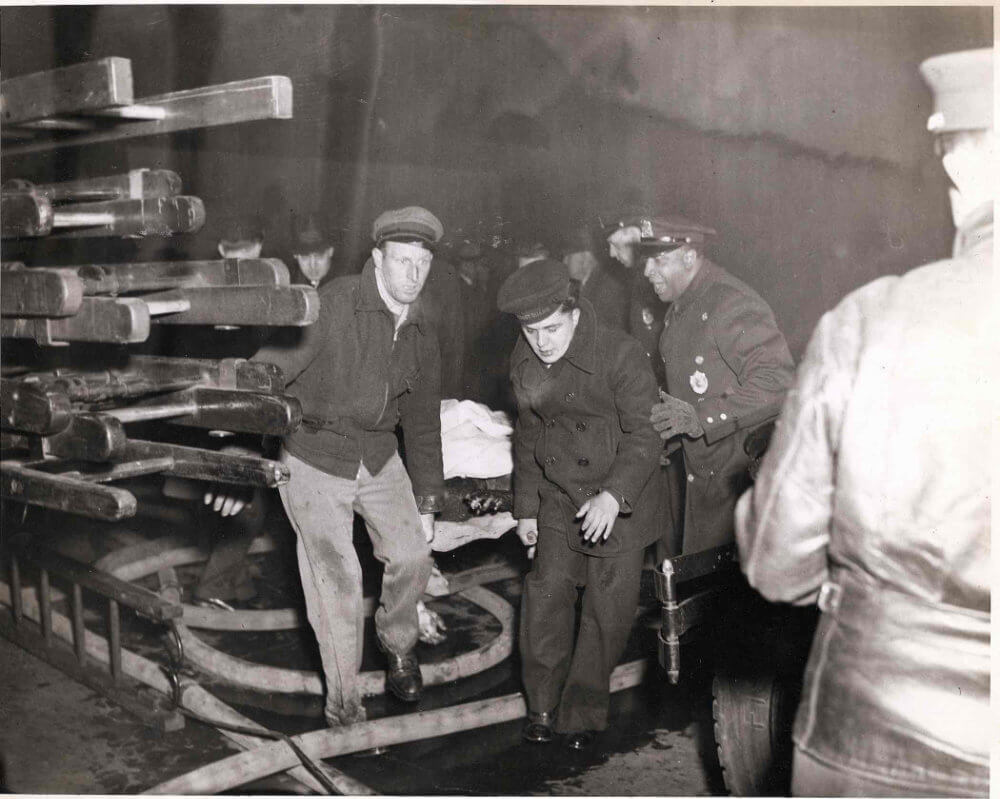
and Broadway. Arriving firefighters could see people trapped behind the revolving door of the main entrance on Piedmont Street. Others frantically tried to rescue those trapped behind a glass-bricks façade on Broadway. The fire was extinguished within an hour of its start and first responders turned to the task of rescue and recovery of bodies.
Often described as a “generational trauma," the fire continues to have an impact on the children and grandchildren of victims and survivors.
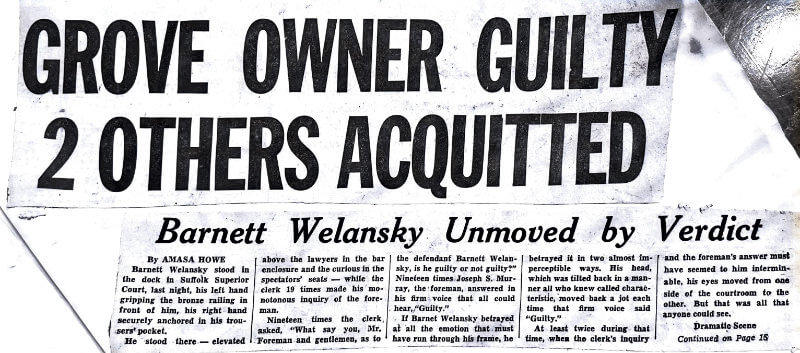
Many law students today study the
legal precedents set by the 1944 trial
of Cocoanut Grove club owner Barnett Welansky in Commonwealth v. Welansky. Welansky was found guilty of involuntary manslaughter, which set a legal precedent for involuntary manslaughter deemed to be caused through wanton or reckless conduct.
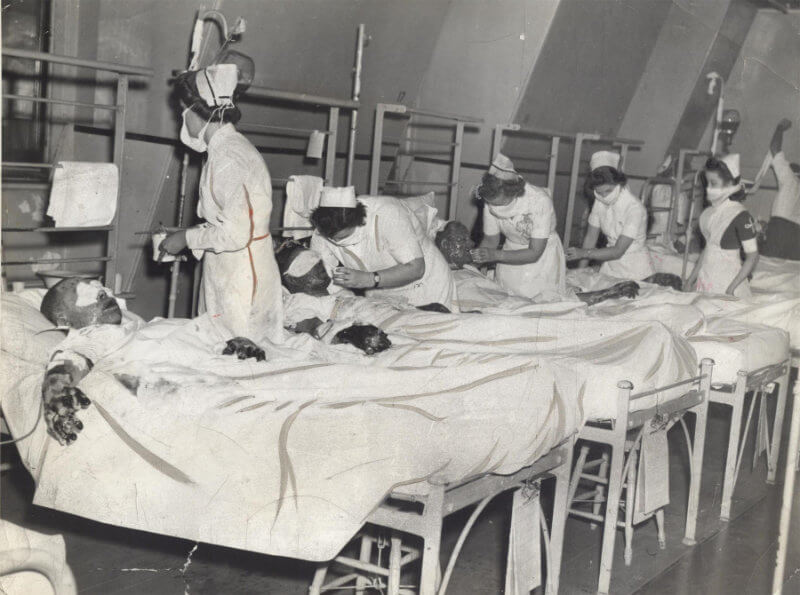
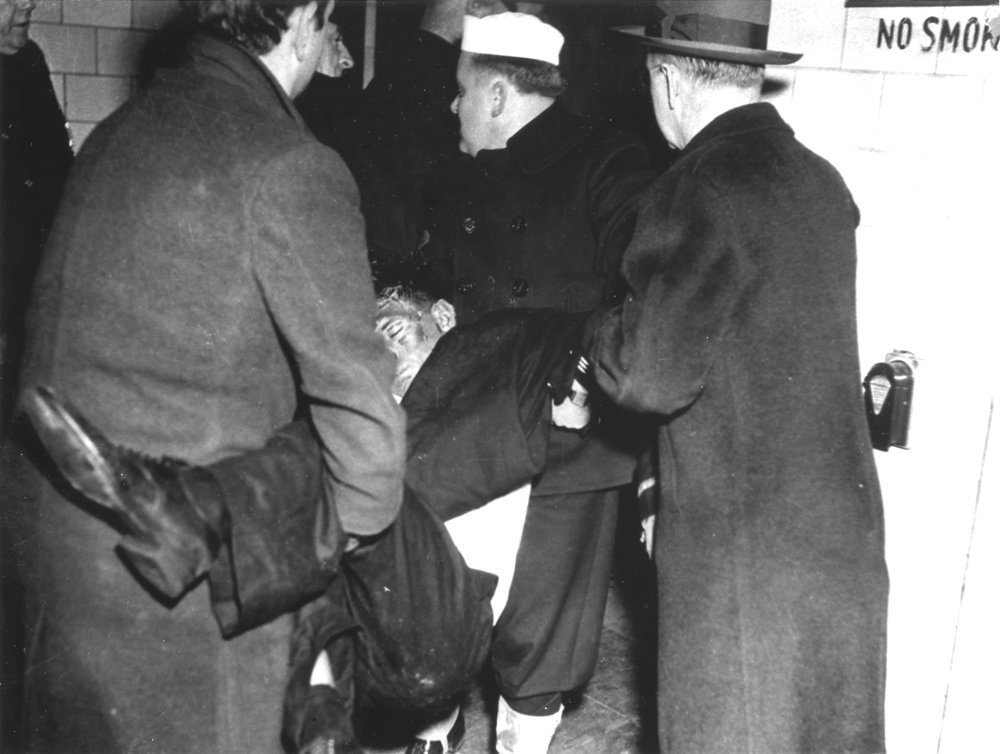
In the days after the fire, penicillin was used to treat Cocoanut Grove victims, the first time this antibiotic was used on a U.S. civilian population. Doctors and nurses struggled to save patients leading to innovations in burn and lung treatment. Psychiatrists worked with survivors leading to studies on the psychological and physiological effects of crisis, grief, and loss -- what we now call post-traumatic shock. These innovations were adopted worldwide.

The fire inspired municipalities, Boston foremost among them, to insist on stricter application and enforcement of model building codes covering areas such as exits, crowd capacity and door type. Most significantly, nightclubs were re-classified as “places of assembly,” which are subject to more stringent codes for exits, emergency lighting, occupancy and other safety features.
City of Boston Arts Commission
City of Boston Community Preservation
The Edward Browne Fund
The George Henderson Foundation
The Shawmut Street Trust
National Fire Protection Association
Massachusetts Charitable Fire Association
Cocoanut Grove Families
Families & Friends of the Cocoanut Grove Memorial
International Association of Fire Fighters
Henry Lee Fund
The Massachusetts House of Representatives
UL Solutions Enterprise
Johnson Controls