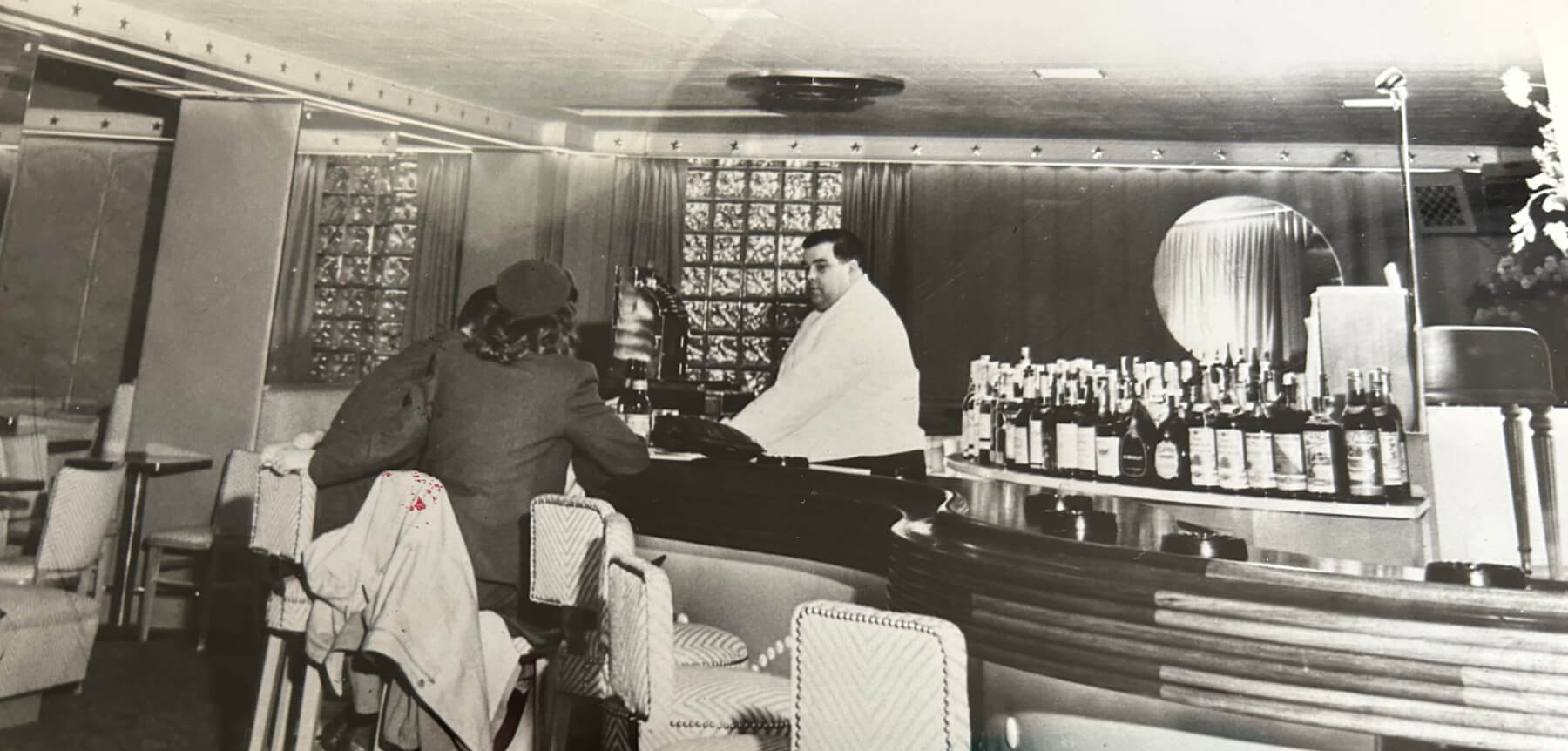
The history of the Cocoanut Grove nightclub is overshadowed by the horrific fire of 1942, but the club played a large role in Boston’s social life in the late 1920s to early 1940s.
Band leader Jacques Stavisky, known professionally as Jacques Renard, opened the Cocoanut Grove on October 27, 1927, at 17 Piedmont Street, in a former garage and film distribution center in a Back Bay neighborhood, with help of entertainer Mickey Alpert and a mysterious West Coast benefactor known as Jack Berman. They envisioned a glamorous destination designed to transport Bostonians to a tropical paradise with live music, fake palm trees and a South Seas theme, patterned after the famous Cocoanut Grove nightclub in Los Angeles. Though known as a nightclub, the Cocoanut Grove was licensed as a restaurant because nightclubs were then banned in Boston. Renard and Berman spared no expense in the club’s décor, bringing in the famous Reuben Bodenhorn as designer. Berman, however, turned out to be a swindler and was arrested by federal agents days before the planned October 1927 on mail fraud charges.
Renard and Alpert carried on, but the national Prohibition prevented the club from legally selling alcohol. In 1931, the business passed into the hands of Charles “King” Solomon, a powerful Boston racketeer, who ran the club as his personal showcase. In 1933, Solomon was gunned down in another local haunt, the Cotton Club. Subsequently, his lawyer, Barnett “Barney” Welansky assumed control of the Cocoanut Grove.
Welansky expanded the club, adding the downstairs Melody Lounge and the large Caricature Bar. He installed a rolling roof, which could be opened to let patrons dance under the stars. By the early 1940s, the Cocoanut Grove was the city’s most popular entertainment venue, with a large floor for dancing, an extensive menu of food and drink, and top-level musical acts. Just 11 days before the fire, Welansky opened an additional lounge on the Broadway side of the club. The nightclub attracted a variety of patrons, both old and young, who sought the glamour of a night on the town.
That all came to an end on November 28, 1942.


Souvenir photos were made available to patrons on the same night for a $10 fee, housed in folders like the one pictured here.
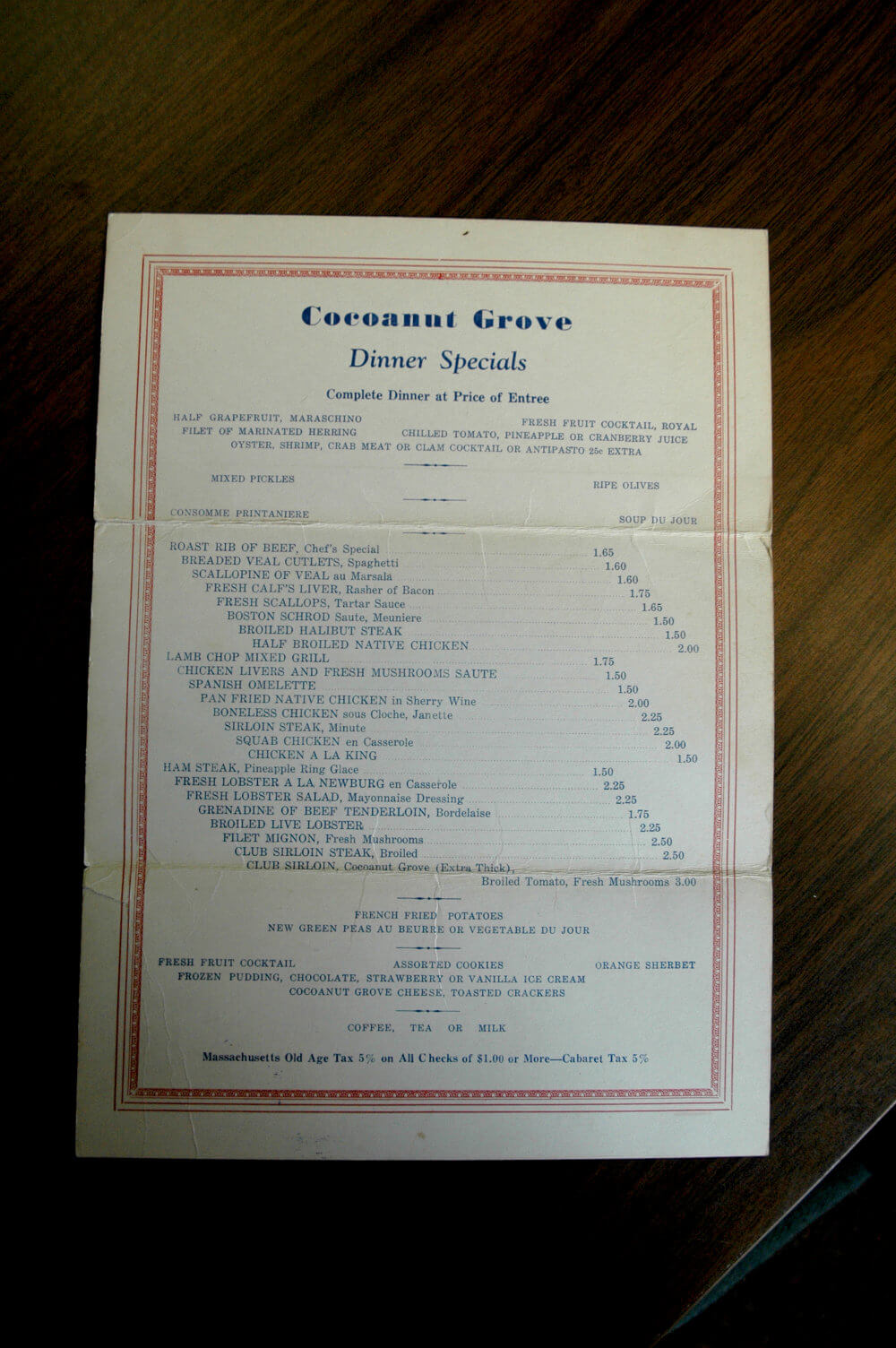
The menu on the day of the fire, saved by a waiter who escaped.
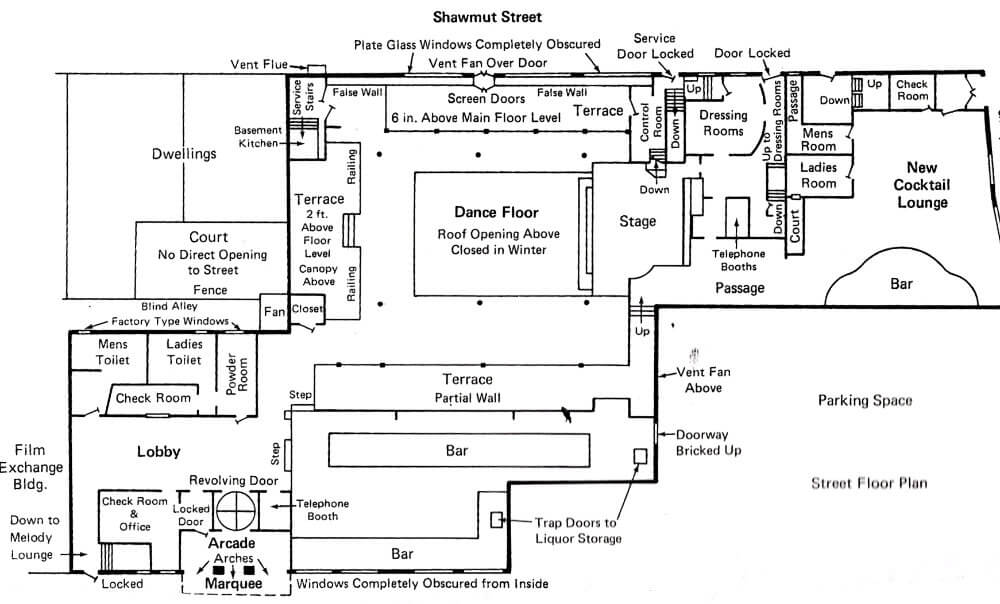
The club’s ground-level floor plan shows the main dining room with its dance floor, its raised rear terrace, where important people were seated, and 48-foot Caricature Bar, Boston's longest.
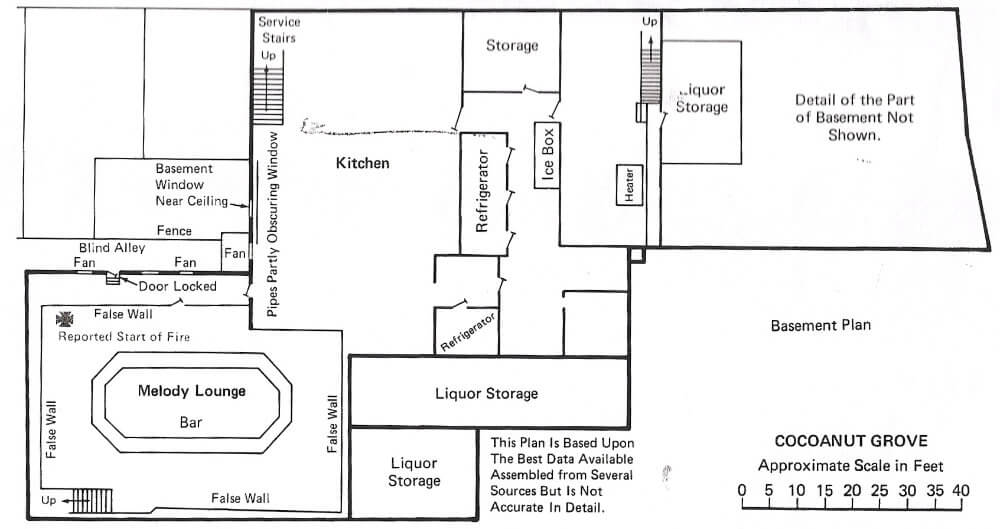
The floor plan of the basement of the club displays the dimly lit Melody Lounge where the fire started in a corner, and its adjacent cellar kitchen.
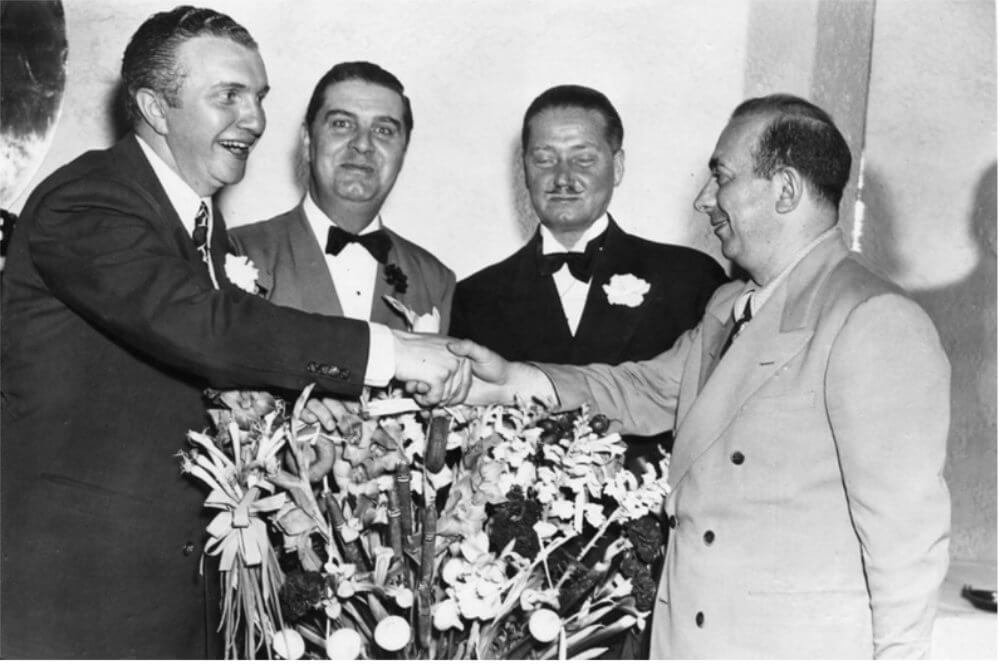
From left: Emcee and Grove co-founder Milton "Mickey" Alpert, house tenor William "Billy" Payne, longtime maitre d' Angelo Lippi, and an unidentified man
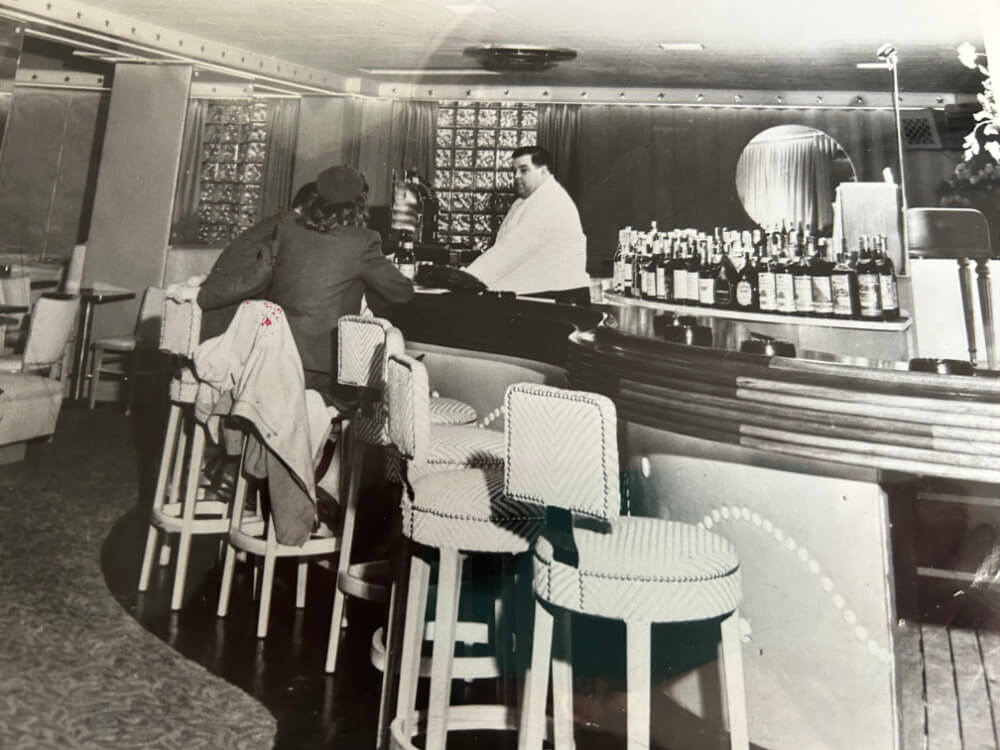
Just 11 days before the fire, a new lounge opened on the Broadway side. This promotional photo shows rotund bartender (and victim) William "Bubbles" Shea with customers.
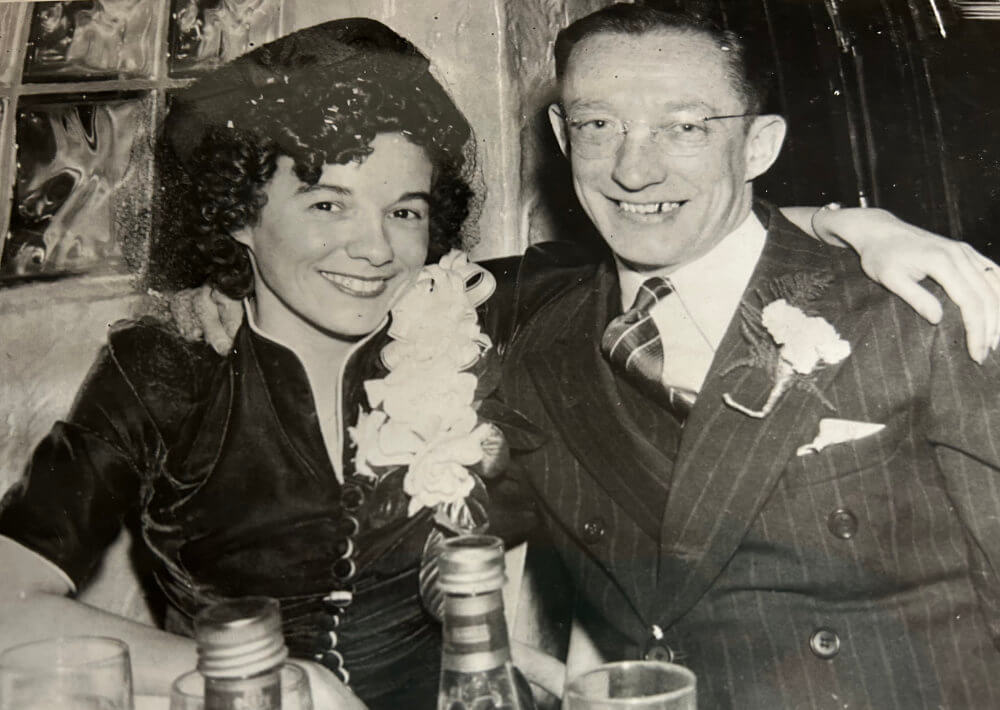
Roving club photographer Doris C. "Lynne" Andrews (1918-1945) took this image of smiling newlyweds John F., Jr. and Claudia O'Neil, of Cambridge, the night of the fire.
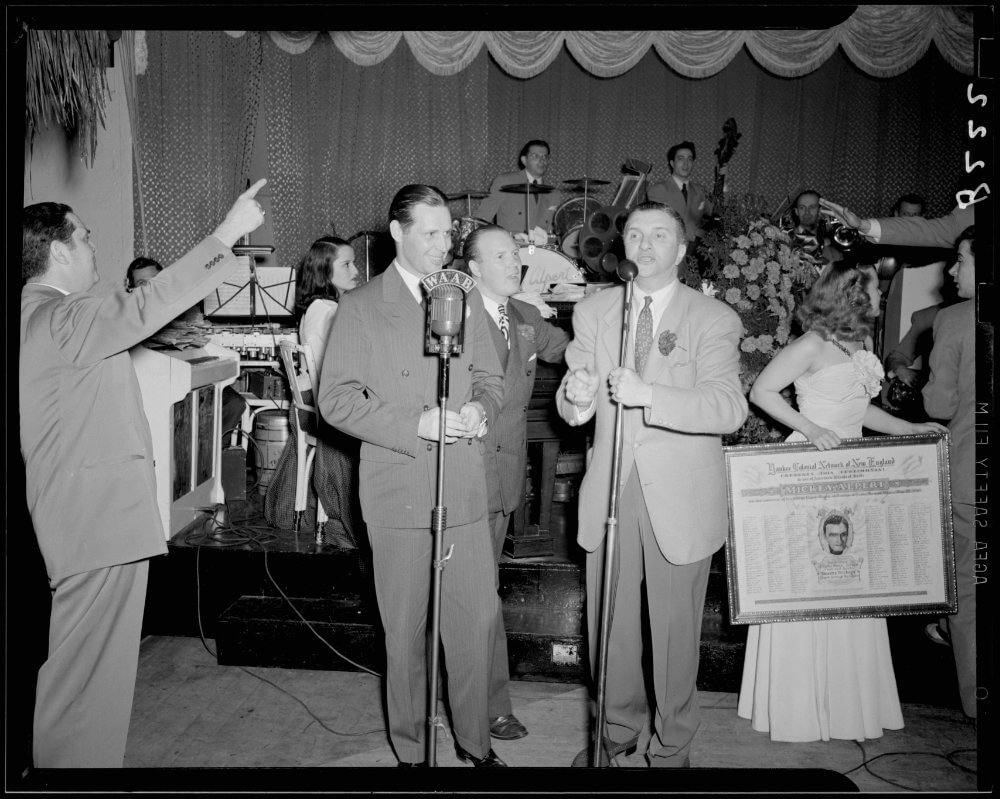
On the 100th consecutive Thursday "Guest Night" in 1941, Mickey Alpert (right) and singer Billy Payne (left with raised arm) flank Boston Mayor Maurice J. Tobin (1901-1953)
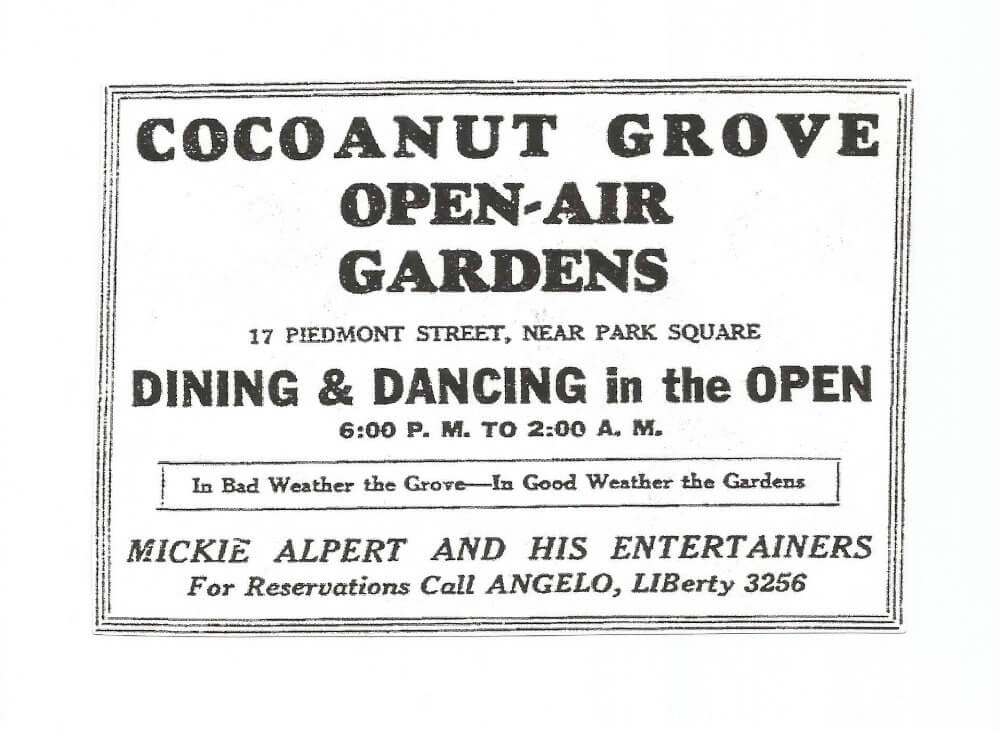
A one-year experiment in 1930 under the stewardship of "King" Solomon was an open-air garden, which was accessed from an exit later be bricked off.
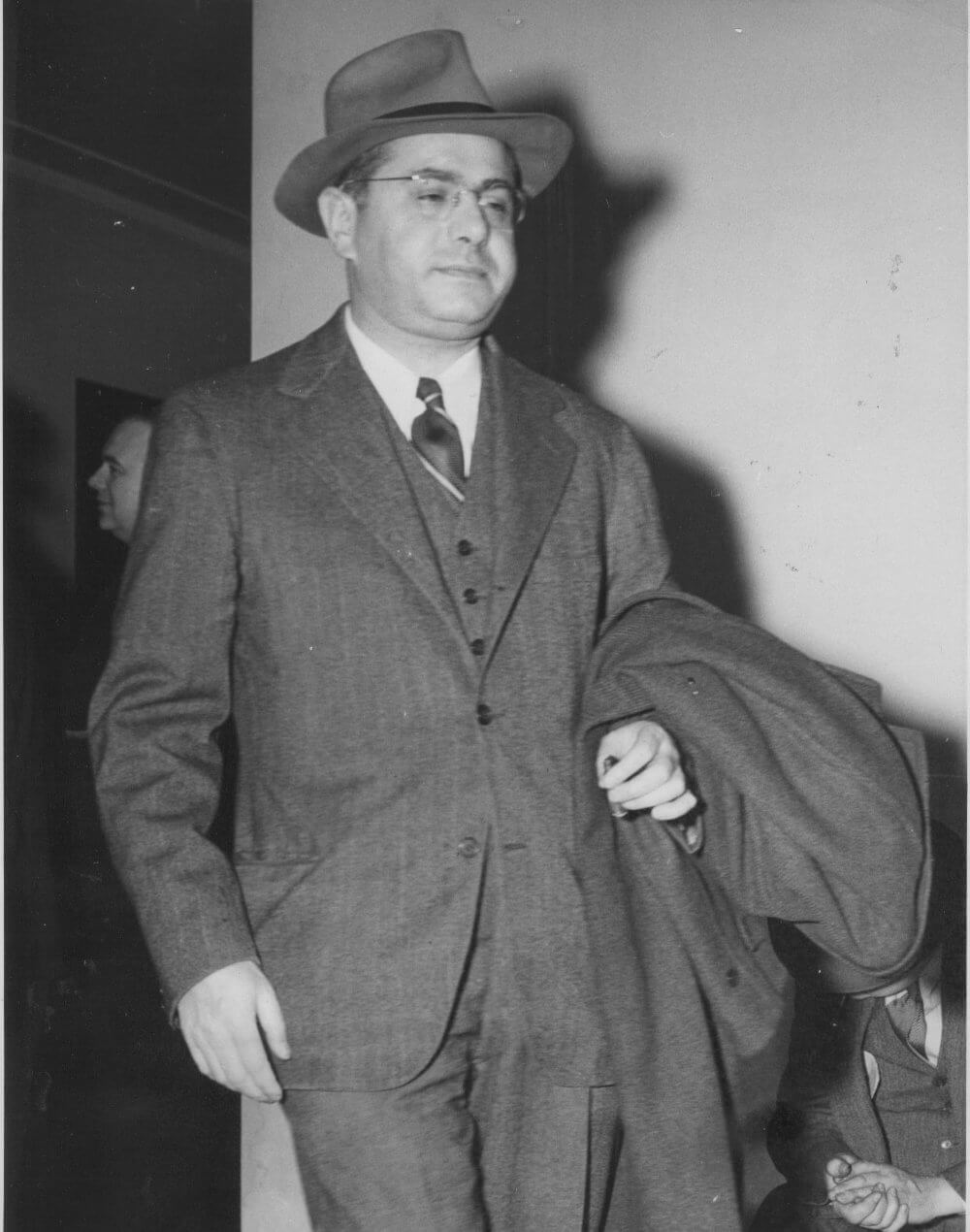
Solomon’s lawyer, Barnett “Barney” Welansky assumed control of the club after Solmon’s murder. After Prohibition was repealed, he added a romantic downstairs "Melody Lounge," a long "Caricature Bar," and a sliding wooden dance floor
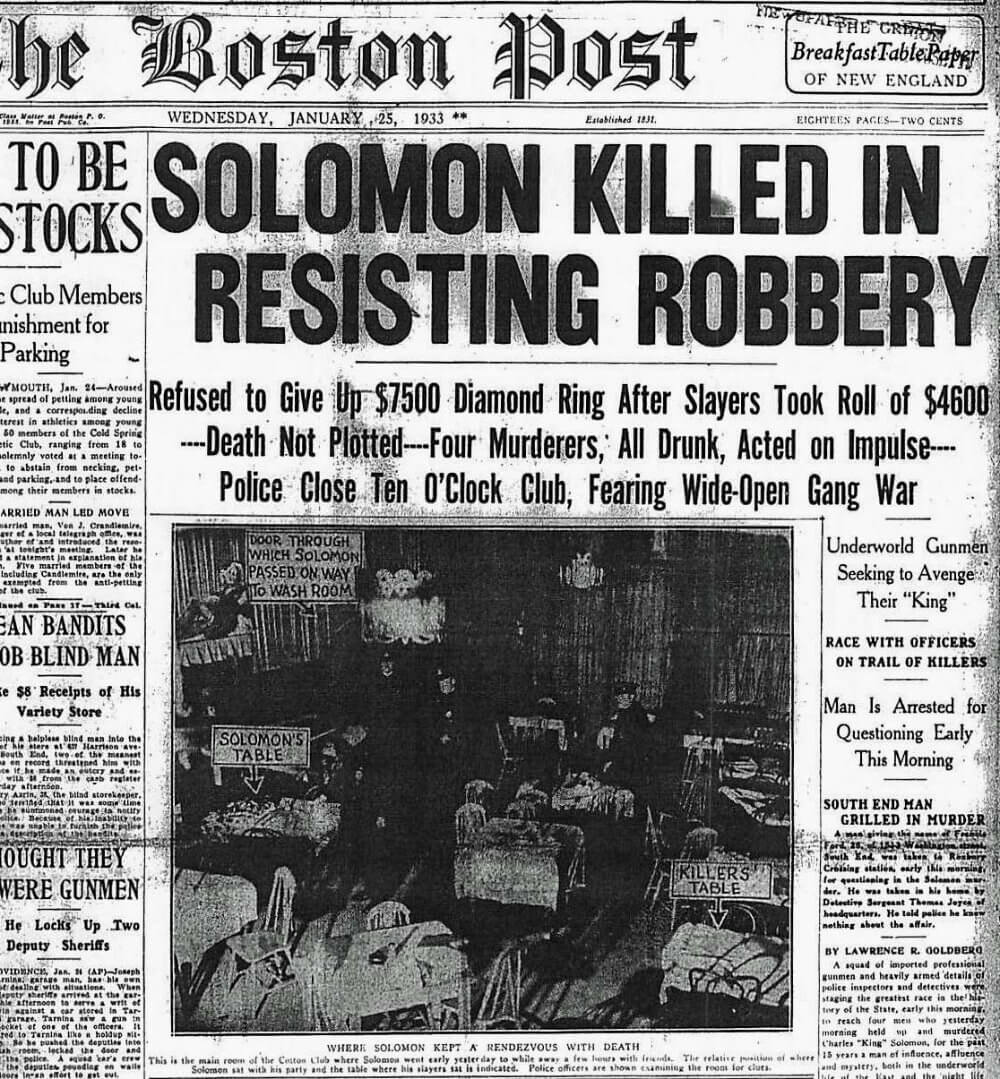
Solomon was gunned down in 1933 at another club in Boston.
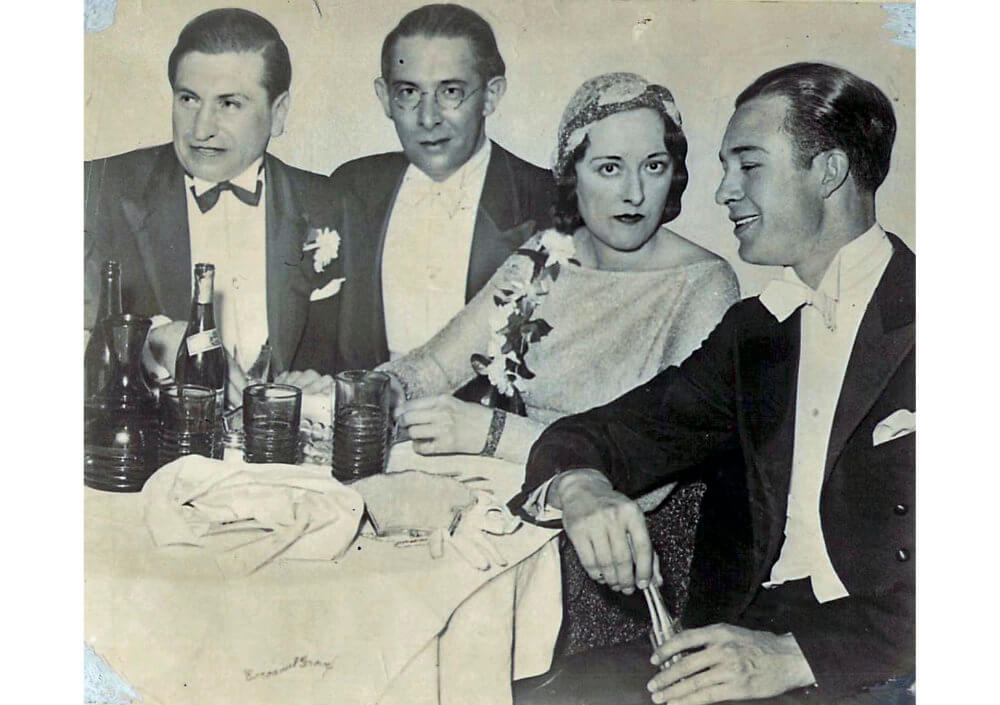
After their shady benefactor was jailed for stock fraud, Alpert and Renard were forced to give up control of the Cocoanut Grove in 1931 to the notorious racketeer Charles “King” Solomon (left).
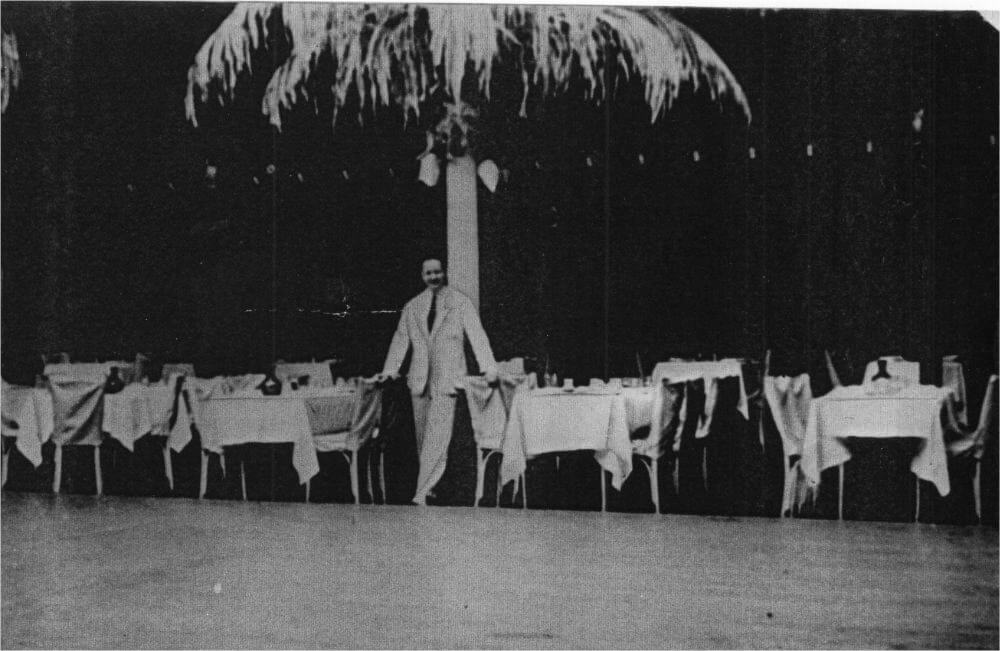
Polished and urbane Angelo Lippi (1886-1966) was the well-known maitre d’ of the Cocoanut Grove. He was not on duty the night of the fire.
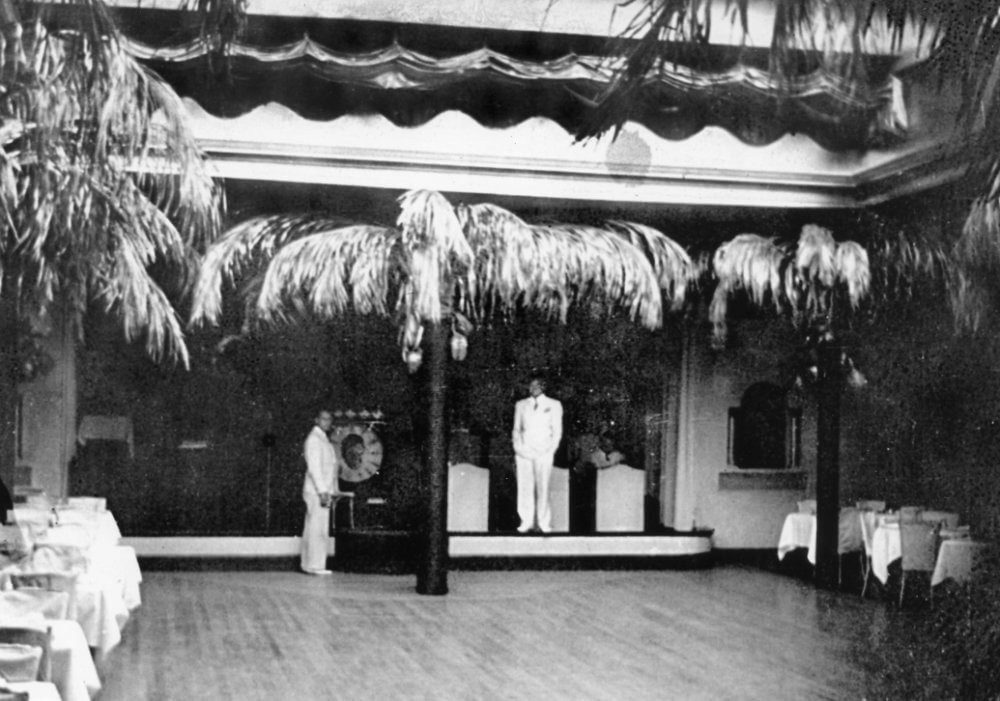
A rare shot of the club's main dining room by the Herb Marsh Band captures daylight through the famed electric "rolling roof" which opened to the skies Friday, June 8, 1934.
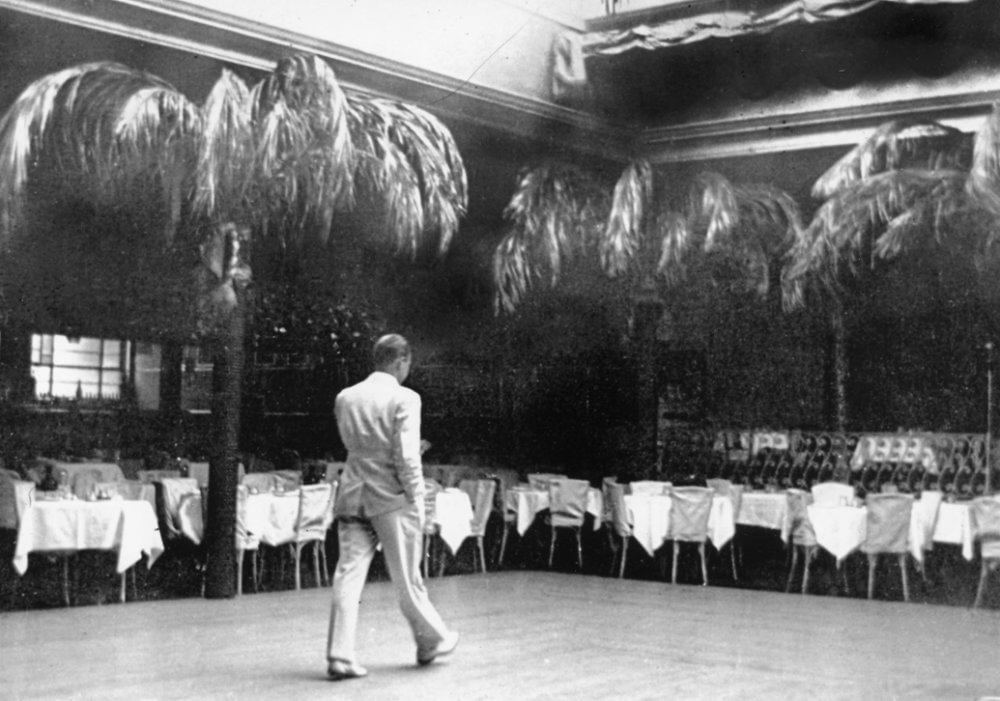
Few photographs of the interior of the Grove before the fire exist. This image was taken by the Herb Marsh Band when they played at there in the 1930s.
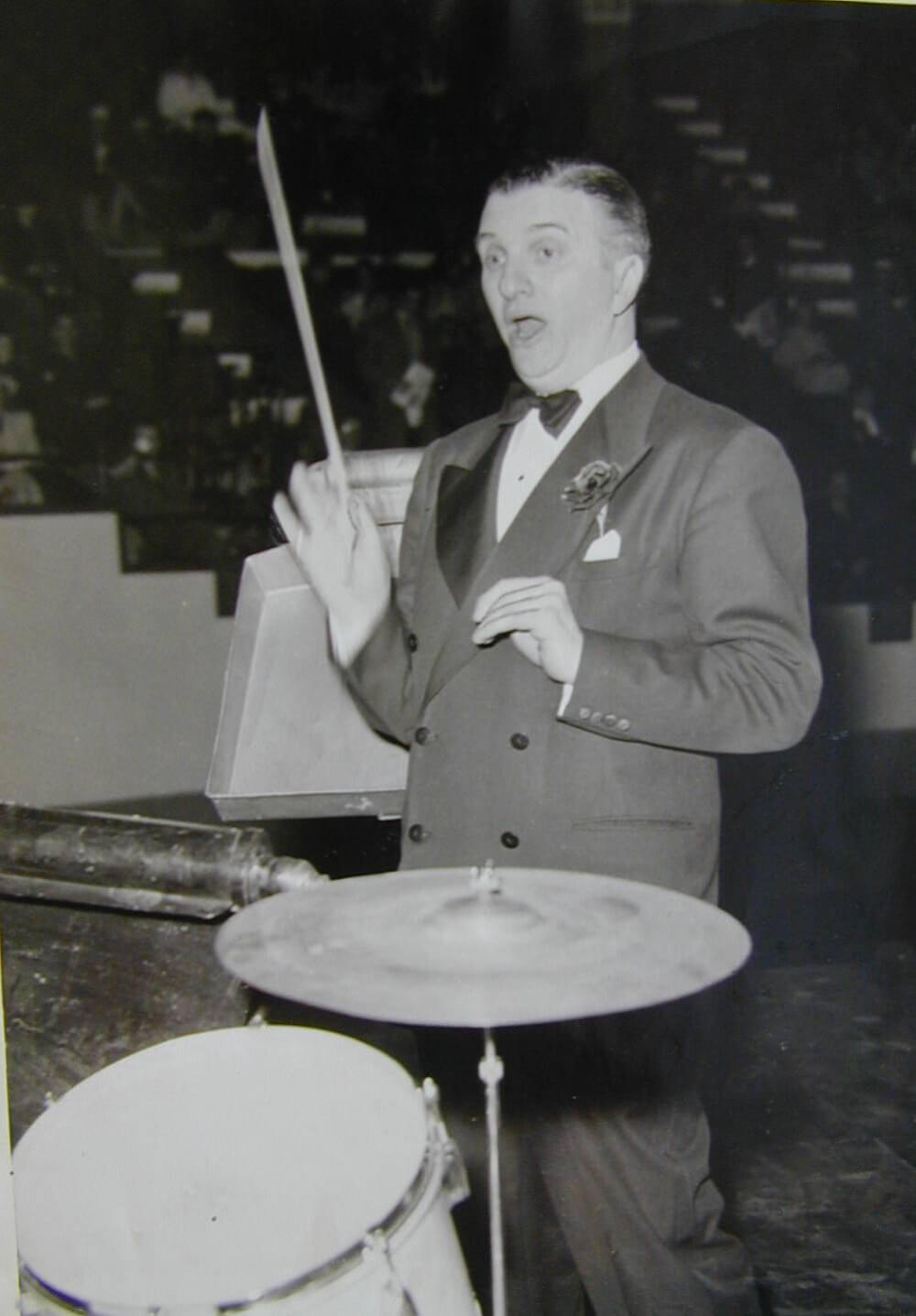
Milton “Mickey Alpert,” (1904-1965), grew up in Boston and became a songwriter, entertainer and orchestra leader, known as the “face” of the Grove.
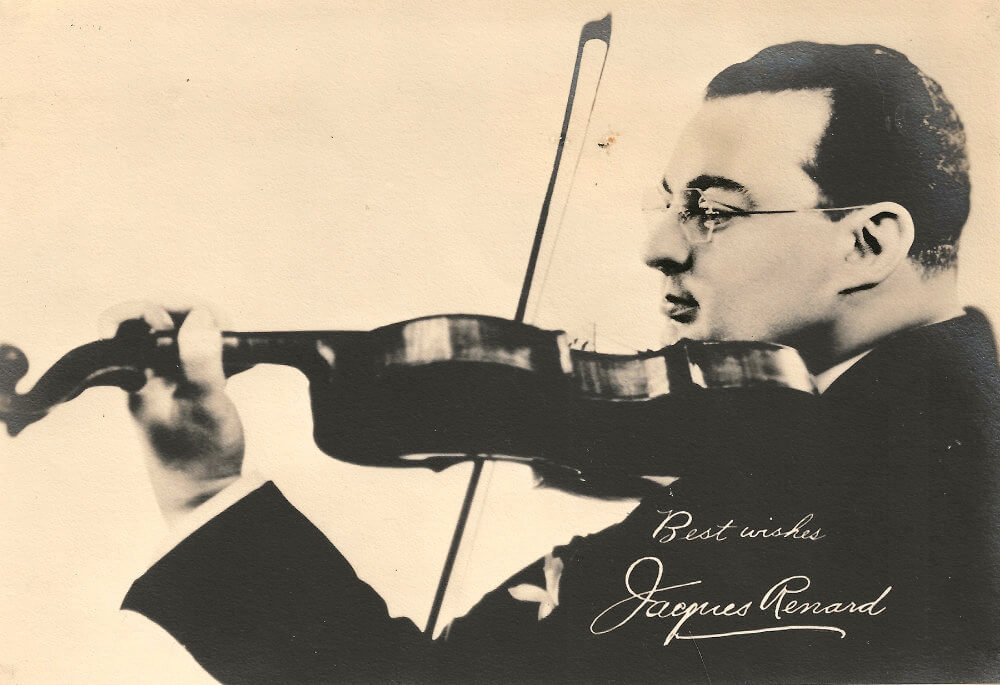
Jacob Stavisky, (1897-1973), known professionally as Jacques Renard, was an American violinist, orchestra leader and songwriter who immigrated from Russia.
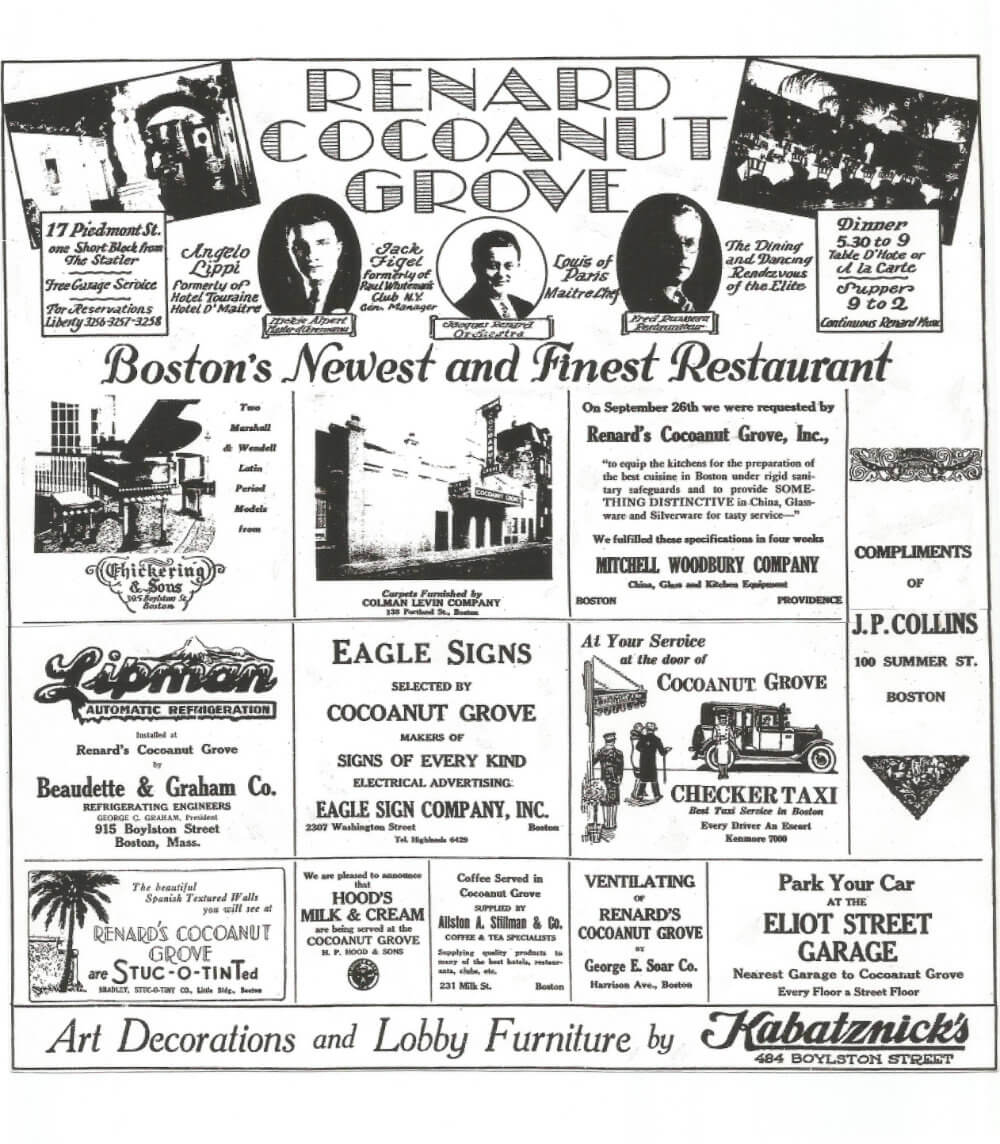
The Grove was licensed as a restaurant because nightclubs were banned in Boston as shown in this November 27, 1927, Boston Herald ad.
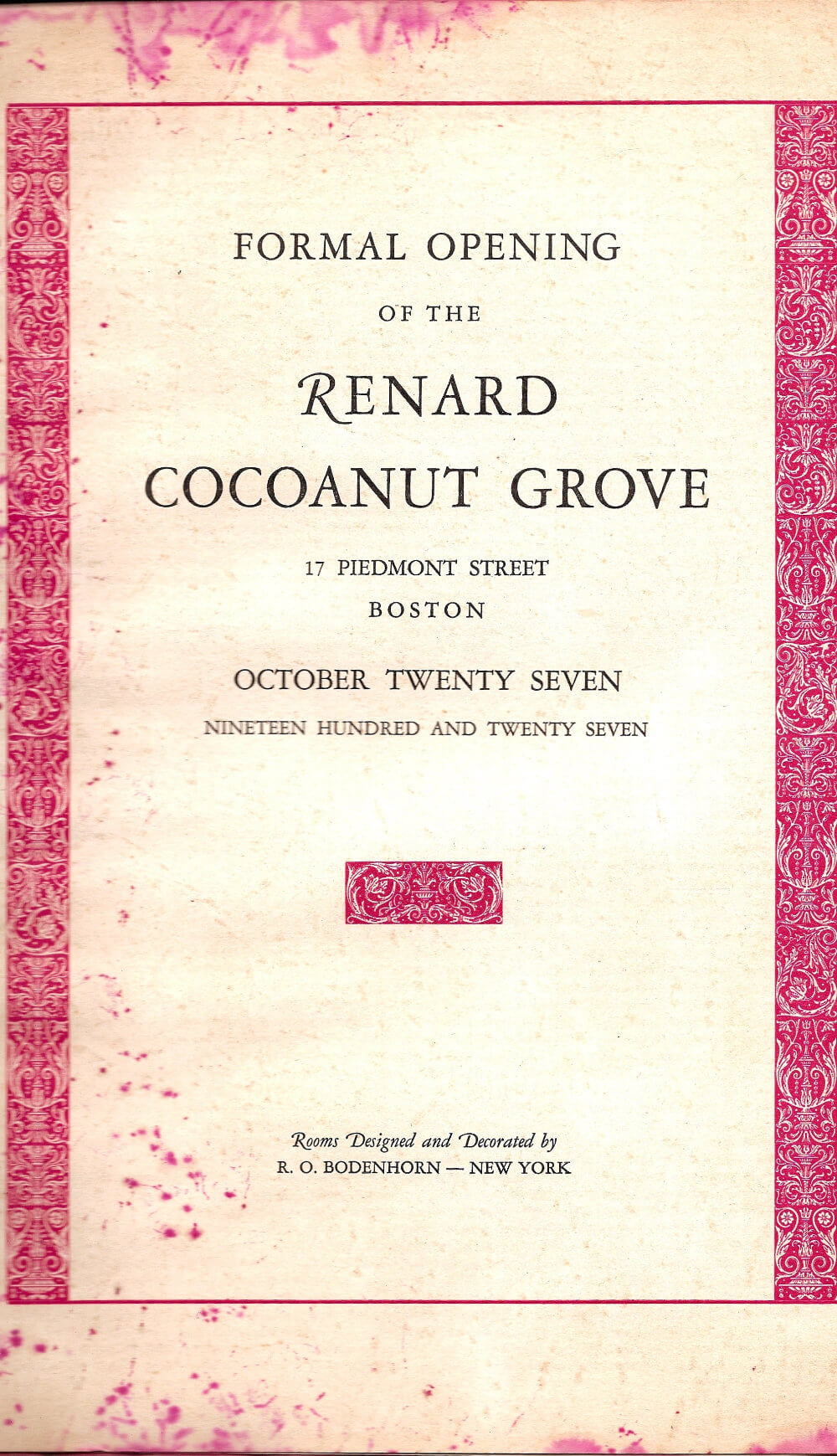
The club, first called the Renard Cocoanut Grove after co-founder and musician Jacques Renard, debuted in Boston on October 27, 1927
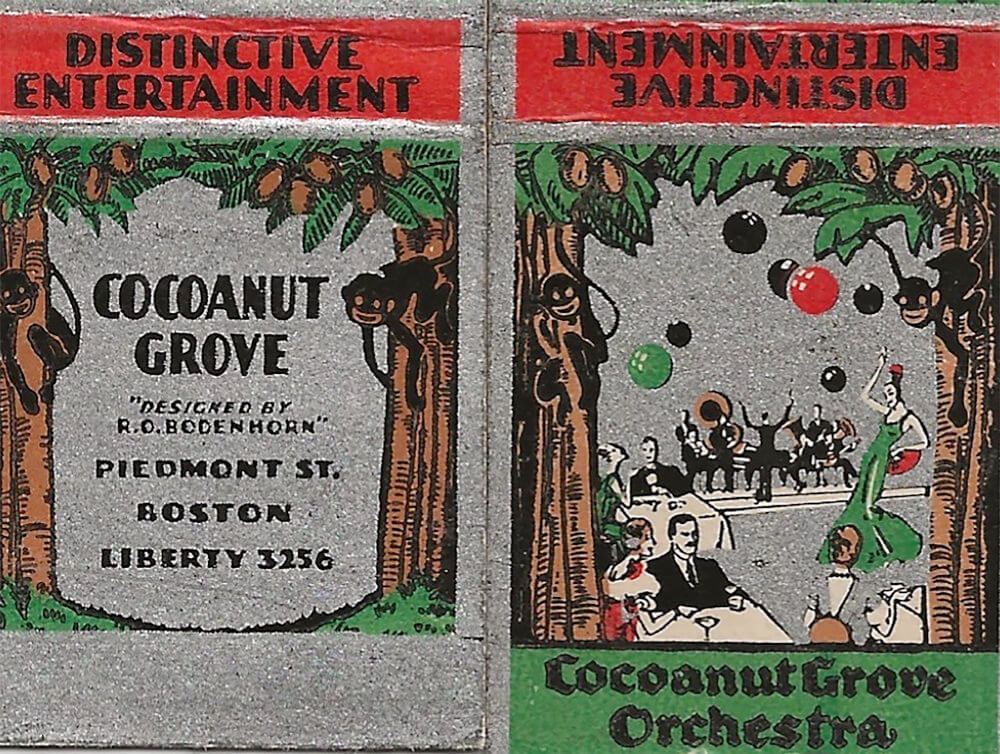
Boston’s Cocoanut Grove was modeled on a tropical theme similar to the famous Cocoanut Grove nightclub at the Ambassador Hotel in Los Angeles.
City of Boston Arts Commission
City of Boston Community Preservation
The Edward Browne Fund
The George Henderson Foundation
The Shawmut Street Trust
National Fire Protection Association
Massachusetts Charitable Fire Association
Cocoanut Grove Families
Families & Friends of the Cocoanut Grove Memorial
International Association of Fire Fighters
Henry Lee Fund
The Massachusetts House of Representatives
UL Solutions Enterprise
Johnson Controls